


 +86-731-89578196
 [email protected]


- Home
- Our Company
-
Products
Sputtering Targets
- Industries
- Blog
- FAQ
- Contact Us
DLC Coatings Explained & How to Choose the Right Sputtering Target
views, Updated: 2026-04-16
What Are DLC Coatings?
Diamond-Like Carbon, or DLC, is a special type of thin carbon coating. It is very hard like diamond but also slippery like graphite. This combination makes DLC coatings wear-resistant, low-friction, and durable, which is why they are used in cars, aerospace, industrial tools, and electronics.DLC coatings are made using advanced techniques such as Physical Vapor Deposition (PVD) or Plasma-Enhanced Chemical Vapor Deposition (PECVD). These methods let manufacturers control the coating’s thickness, hardness, and smoothness, so it performs well even in tough conditions.
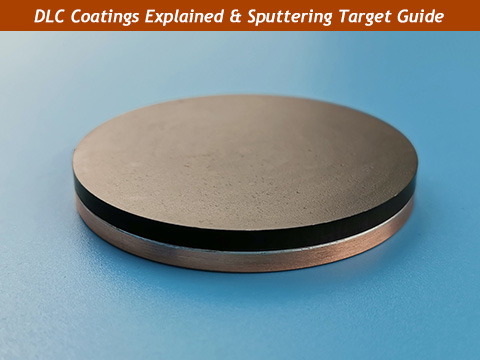
Using high-quality sputtering targets allows manufacturers to produce DLC coatings with consistent performance, whether for cutting tools, automotive components, or aerospace parts.
Types of DLC Coatings
Diamond-Like Carbon (DLC) coatings come in several types, each designed for specific properties like hardness, flexibility, wear resistance, and low friction.1. a-C (Amorphous Carbon)
- Pure amorphous carbon with high hardness.
- Suitable for general industrial applications where wear resistance is needed.
- Has a diamond-like structure, making it extremely hard and wear-resistant.
- Often used for cutting tools, dies, and parts exposed to heavy abrasion.
- Carbon combined with metals like W, Ti, Mo, or Al.
- Improves adhesion, hardness, and corrosion resistance for demanding industrial or automotive applications.
- Contains hydrogen, making the coating slightly softer and more flexible.
- Reduces friction and wear on moving parts.
- Combines hydrogen and metal doping for a balance of flexibility, wear resistance, and chemical stability.
- Used in automotive, aerospace, and precision components.
- Contains additional elements like Si, O, N, F, or B to enhance hardness, adhesion, or thermal stability.
- Suitable for high-tech or specialized applications where standard DLC coatings may not be enough.
Key Applications of DLC Coatings
DLC coatings are used across many industries because they are hard, low-friction, and wear-resistant. They help parts last longer, reduce energy loss, and perform better under tough conditions.Consumer Electronics
DLC coatings protect moving parts and improve durability. Foldable screen hinges can survive over 200,000 folds without scratches, with a friction coefficient below 0.02 and a hardness of 9H, solving “crease anxiety” in foldable phones. DLC coatings are also applied to phone backs and smartwatches, creating black surfaces that are both scratch-resistant and attractive.New Energy Vehicles
In electric vehicles, DLC coatings reduce friction and improve efficiency. Motor rotors and gears coated with DLC lose less energy, increasing efficiency by 2.3%, which adds about 12 kilometers of range on the NEDC cycle. Piston rings coated with DLC are self-lubricating in dry conditions, reducing oil consumption while maintaining strong adhesion.Biomedical Applications
DLC coatings enhance both performance and safety in medical devices. Artificial joints use coatings that repel bacteria in some areas and promote bone growth in others, speeding bone healing by 40%. Surgical instruments with DLC coatings help reduce infection risks.Cutting Tools
Modern cutting tools face higher demands due to high-speed precision machining, dry cutting, and hard material processing. DLC coatings on cutting tools improve efficiency, precision, and tool lifespan, while reducing production costs. They make it possible to handle hard materials over 50 HRC, work with minimal or no cooling, and achieve consistent results in dry or micro-lubricated cutting processes.Molds
Mold durability is critical, especially when molding materials with glass fibers or requiring improved lubrication. DLC coatings applied via PVD provide superior hardness and lubrication, reducing wear and improving the demolding process. This ensures molds last longer and maintain high-quality production standards.Aerospace and Energy
DLC coatings work in extreme conditions. Satellite bearings can operate in a vacuum for over 8,000 hours, five times longer than standard lubrication. High-pressure valves in deep-sea oil and gas applications experience lower friction torque and better sealing.These examples show how DLC coatings are used across electronics, automotive, biomedical, manufacturing, and aerospace industries, improving durability, efficiency, and performance under demanding conditions.
Advanced Deposition Methods for DLC Coatings
DLC coatings can be made using several deposition methods, but not all of them use solid sputtering targets. Understanding the differences helps explain where premium targets are needed and why they matter for coating performance.PVD Methods That Use Sputtering Targets
Some high-performance DLC coatings rely on solid carbon or composite targets to deposit material onto the substrate. These include:- Sputtering Deposition: Carbon atoms are released from a solid graphite target when bombarded with ions. This includes DC sputtering, RF sputtering, and magnetron sputtering, allowing precise control of film thickness and structure.
- Filtered Cathodic Arc Deposition (FCVA): A plasma arc evaporates carbon from a solid target. Magnetic filters remove unwanted particles, producing a dense, high-quality DLC film.
- Pulsed Laser Deposition (PLD): A high-energy laser vaporizes a graphite target, forming carbon ions with high energy. This method produces DLC with high sp³ content, giving excellent hardness.
- Ion Beam Deposition (IBD): Carbon ions are sourced from a solid carbon target and accelerated onto the substrate. This method produces pure, uniform films with very low hydrogen content.
Methods That Do Not Use Sputtering Targets
Other DLC deposition methods use gases or solutions instead of solid targets:- Plasma-Enhanced Chemical Vapor Deposition (PECVD): Carbon is supplied from gaseous precursors, which are broken down in plasma and deposited on the substrate.
- Direct Photochemical CVD (DPCVD): Light breaks down carbon-containing gases to form a coating at low temperatures.
- Electrochemical Deposition: Uses carbon-rich solutions with a small voltage to deposit DLC onto conductive substrates.
Selecting the Premium Sputtering Target for DLC Coating
Not all DLC coatings use the same process. Only coatings made with PVD methods—like magnetron sputtering, cathodic arc, or ion beam deposition—require solid targets. These targets are important because they control the coating's hardness, adhesion, and durability.At AEM Deposition, we provide premium sputtering targets designed for DLC coatings. Our targets, including high-purity graphite and tungsten carbide, make it easier to produce smooth, uniform, and long-lasting coatings, even for the most demanding applications.
High-purity graphite targets are versatile and can create hydrogen-free DLC like ta-C, or hydrogenated DLC when hydrogen or hydrocarbon gases are added.
For high-performance or heavy-duty applications, tungsten carbide targets (WC) offer additional benefits:
- Very high density and purity, ensuring smooth, consistent coatings.
- Excellent heat resistance, handling 1900–2200°C without damage.
- Fine microstructure, allowing even erosion during deposition for better coating adhesion.
- Binder-free design, free of nickel, cobalt, or other harmful materials, making them safe and eco-friendly.
Conclusion
DLC coatings are an effective way to improve hardness, wear resistance, and reduce friction in many industries. They are used in electronics, automotive parts, cutting tools, molds, aerospace, and biomedical devices, helping components last longer, work more efficiently, and perform reliably.The sputtering target you choose makes a big difference in the quality of the coating. Using premium targets from AEM Deposition, like high-purity graphite or tungsten carbide, ensures coatings are uniform, durable, and consistent, even in demanding applications.
For reliable, high-performance DLC coatings, working with a trusted sputtering target supplier like AEM Deposition ensures you get premium targets that deliver consistent results every time. Our team can help you choose the right sputtering target and provide guidance to get the best results for your project.
LATEST NEWS